


TriShield™ Grill Mat - Ultimate Patio & Deck Protection
TriShield™ Grill Mat - Ultimate Patio & Deck Protection
Couldn't load pickup availability

The 30-Day Deck Guarantee
Your deck stays clean, or it's free. Put it down and cook on it for thirty days — grease, drips, whatever your cooker does. If your deck is not as clean as the day you put the mat down, or you are unhappy with it for any other reason, one email gets you a full refund and you do not have to ship the mat back. Fewer than 2% of buyers have ever used it.
- 💧 Sealed, non-porous face — grease beads instead of soaking in
- 🛡️ Woven fiberglass core — a dropped coal stops in the mat
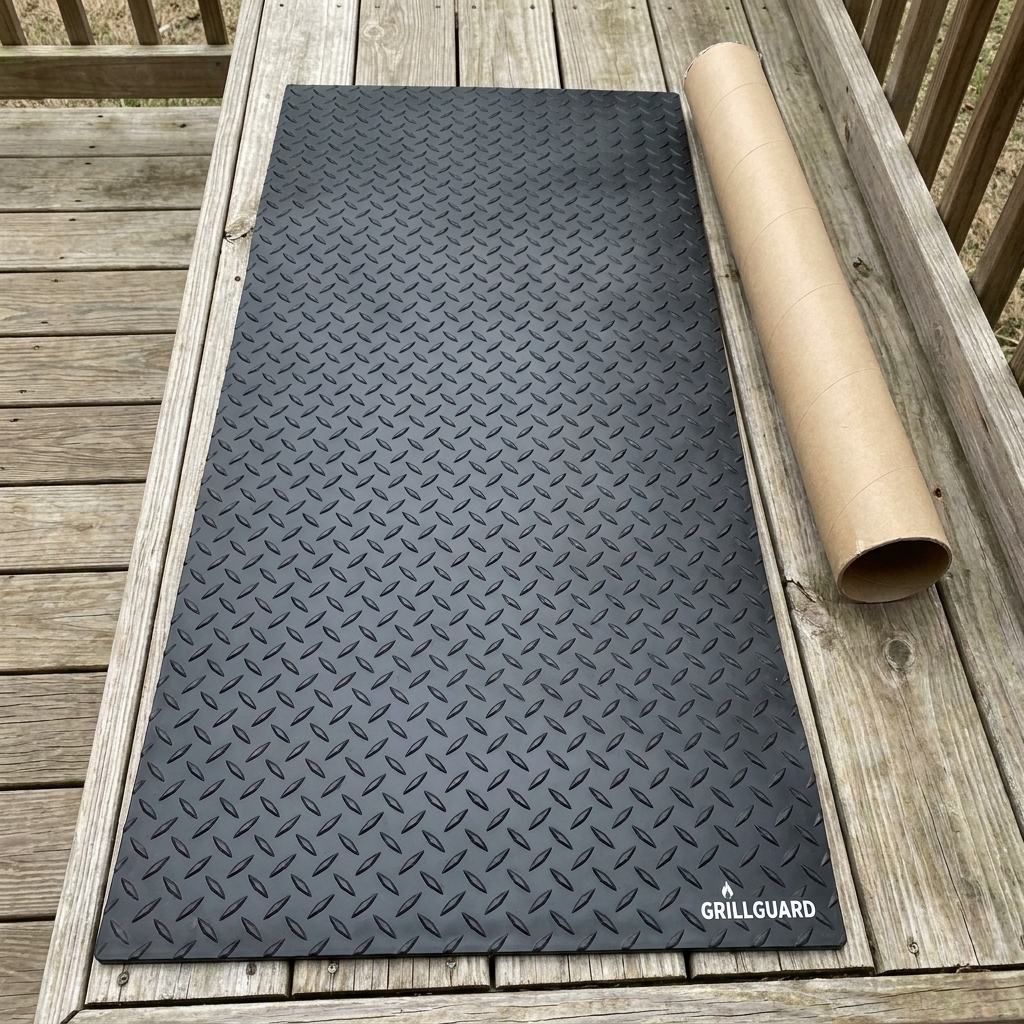
- 📦 0.25" thick, ships rolled — no crease, no curled corners

TriShield™ Grill Mat - Ultimate Patio & Deck Protection
"Whatever comes off the cooker stays on the mat until I hose it. Four minutes, all season. My old one soaked it up and went rancid by August."
Will it actually stop grease from reaching my deck?
Will it actually stop grease from reaching my deck?
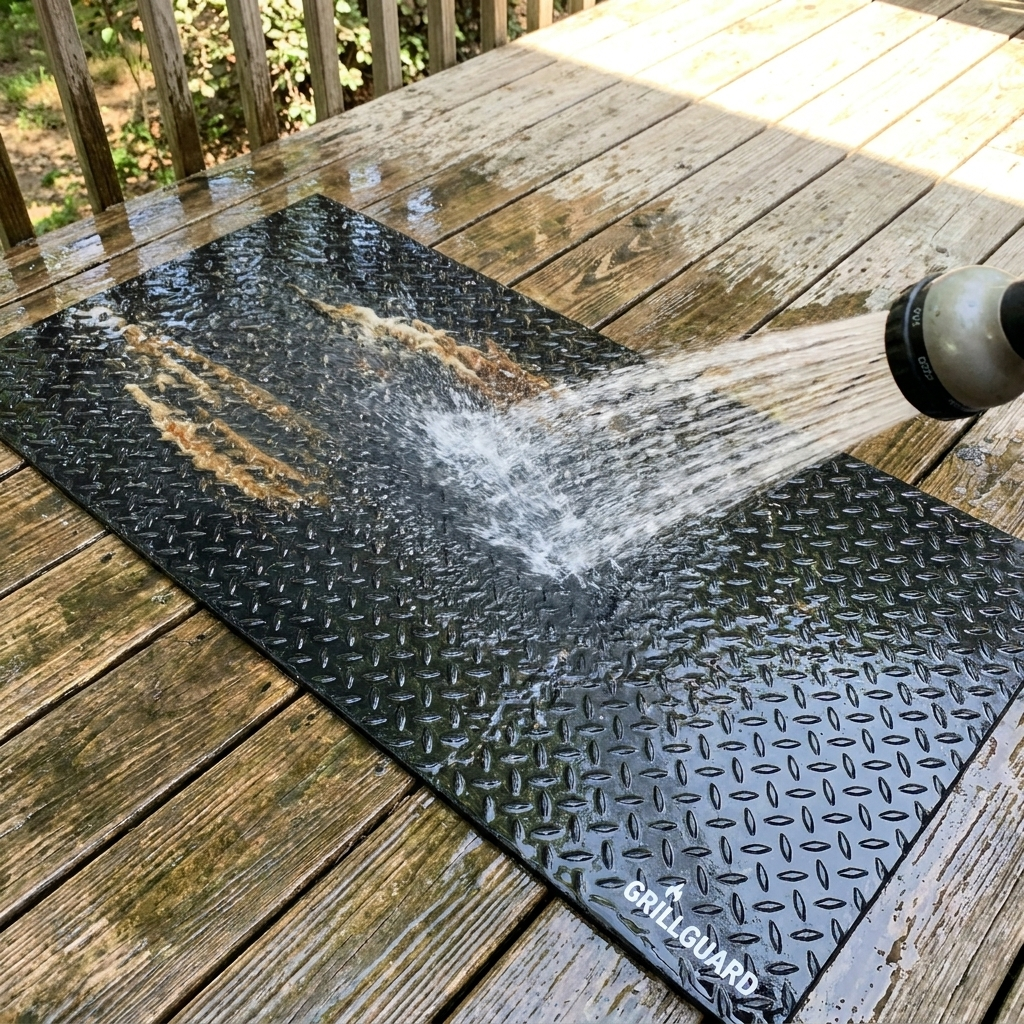
That is the one job it was built around. The face is sealed, closed-cell PVC — no weave, no felt, no open structure — so grease has nothing to sink into. It beads on the surface, a raised perimeter lip keeps it pooling on the mat instead of running off the edge, and a garden hose takes it off. This matters more than it sounds, because grease that gets onto a deck is not sitting on top of the board. Porous concrete, pavers, unsealed wood and the cap layer of a composite board all draw oil down into the substrate within hours, which is why degreaser and a pressure washer do so little — by the time you can see the spot, it is below the plane anything reaches. The mat works by making sure that never starts.
What happens if a hot coal drops on it?
What happens if a hot coal drops on it?
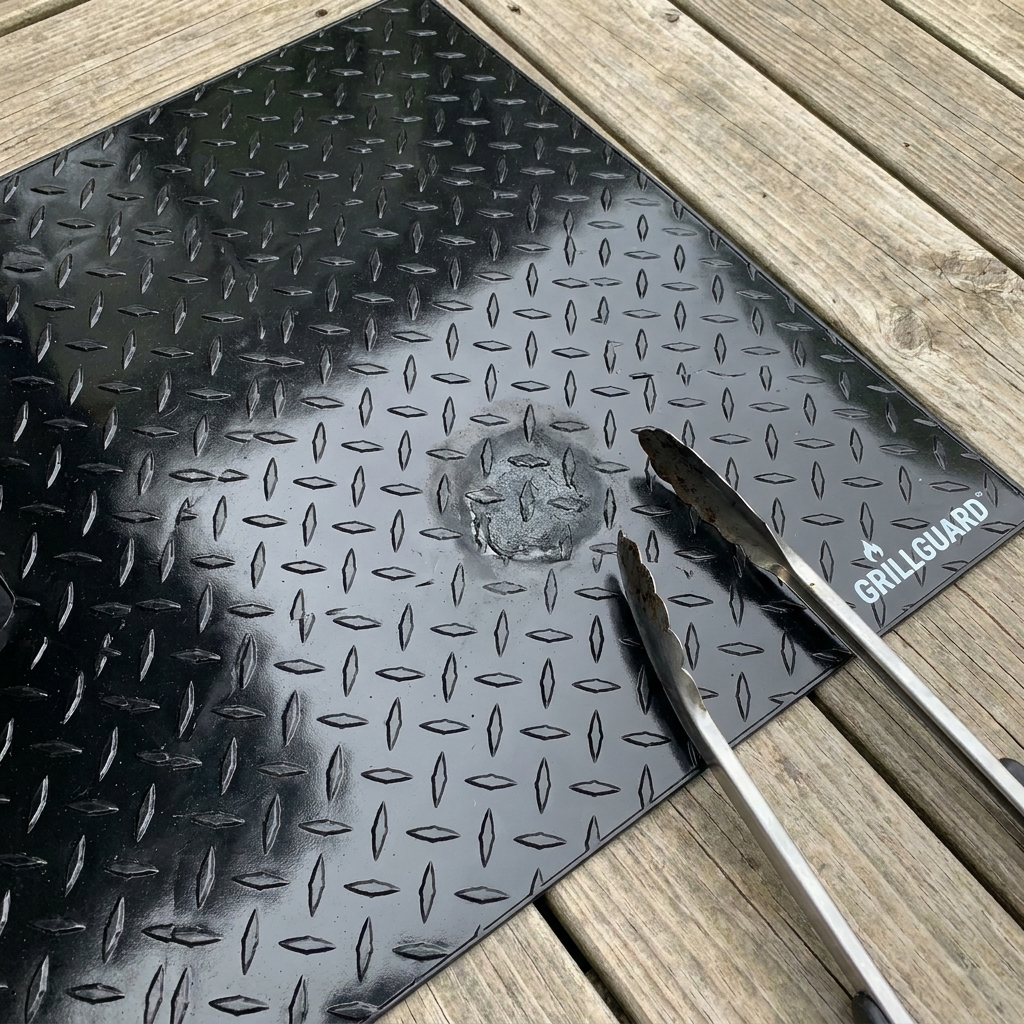
It stops there. The PVC face melts locally — you will have a mark, and that mark is permanent. Underneath it, the woven fiberglass scrim arrests the burn. A charcoal ember burns at 700–1,200°F. The TriShield fire-resistant fiberglass core is rated to 1,250°F. The honest version is this: the mat takes the damage so the board does not, and a scar in the face is the mechanism working, not a defect. What it is not is a heat barrier — it catches what falls, it does not block sustained heat, and nothing here makes a deck non-combustible or a cooker safe to leave running unattended.
Isn't this just a thicker version of the cheap mats?
Isn't this just a thicker version of the cheap mats?
It is a different build. The cheap tier is one material, a millimeter or two thick, usually felt or fabric or open-cell foam — and a single material cannot be both the surface you scrub and the barrier that stops what falls. So it absorbs the grease instead of blocking it, and a coal goes straight through. TriShield is three layers, each with one job: a sealed non-porous face, a woven fiberglass core as the arrest layer, and a ribbed silicone backing. Total thickness is a quarter of an inch — roughly six times the category norm. You can feel it the second you pick it up.
Will it fit my grill?
Will it fit my grill?
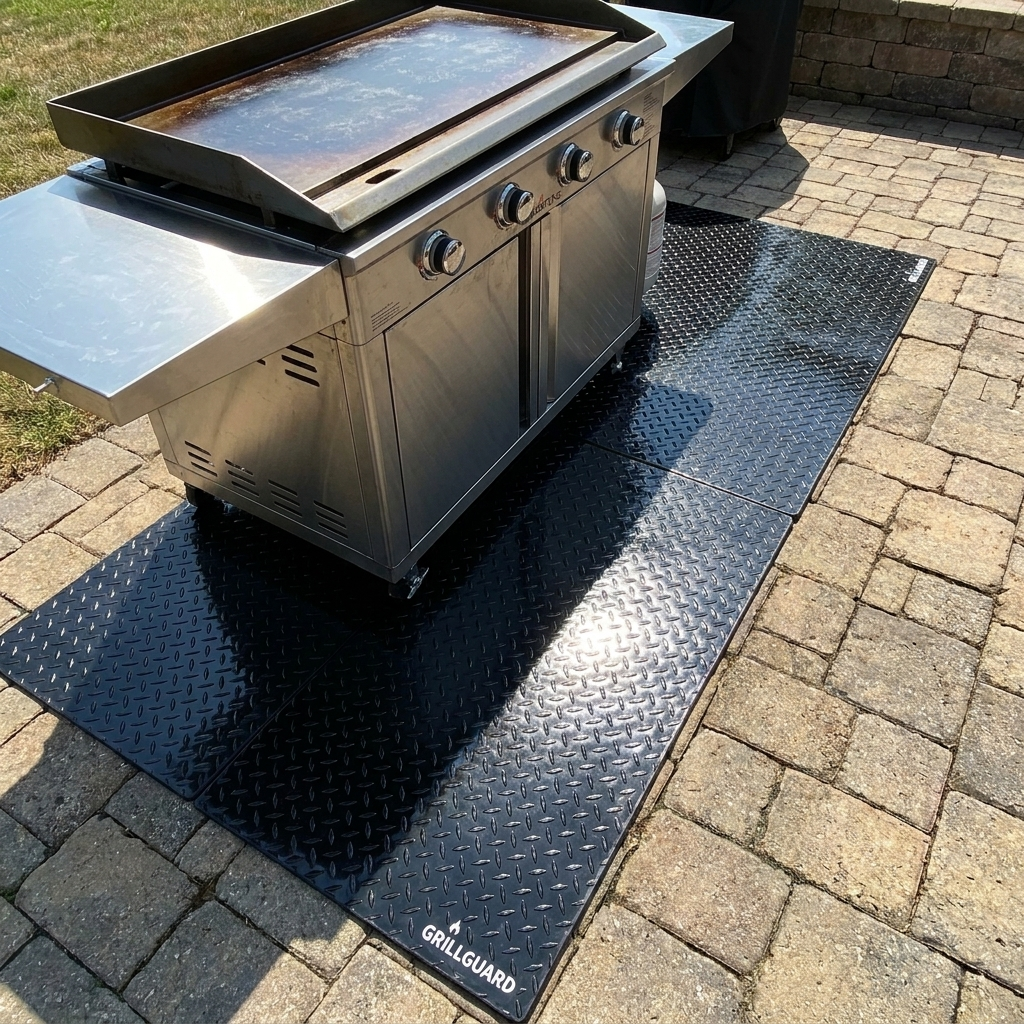
60" × 30", 12.5 sq ft. It fits with margin under a 22" kettle, a 3–4 burner cart-style gas grill, and most pellet grills. Where one unit is not enough: a 28"–36" griddle throws grease in front of and behind the cooker, well past a single mat's footprint — for those, two units laid end to end is the honest answer, not one. Measure your cooker's footprint and add a foot on the drip side.
Does it need to come up between cooks?
Does it need to come up between cooks?
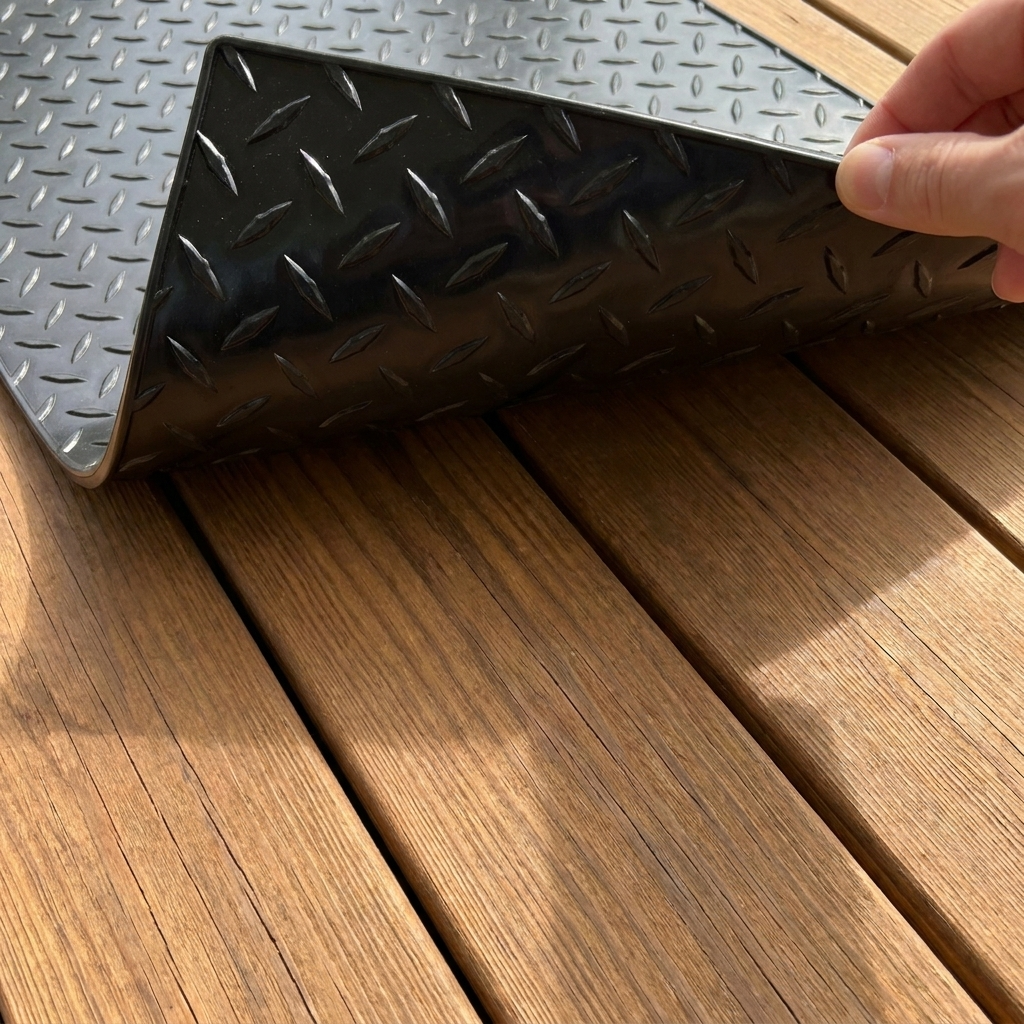
No — that is the design goal. Most mats get lifted and stored because of what they do to the deck underneath if you leave them; this one is specified so you do not have to. The backing is ribbed silicone, so water drains out and air moves under it rather than sitting against the boards, and the face carries a UV package. It ships rolled on a core rather than folded, so it is flat out of the tube, and the woven glass core stops the corners curling through hot and cold cycles. Put it down and leave it.


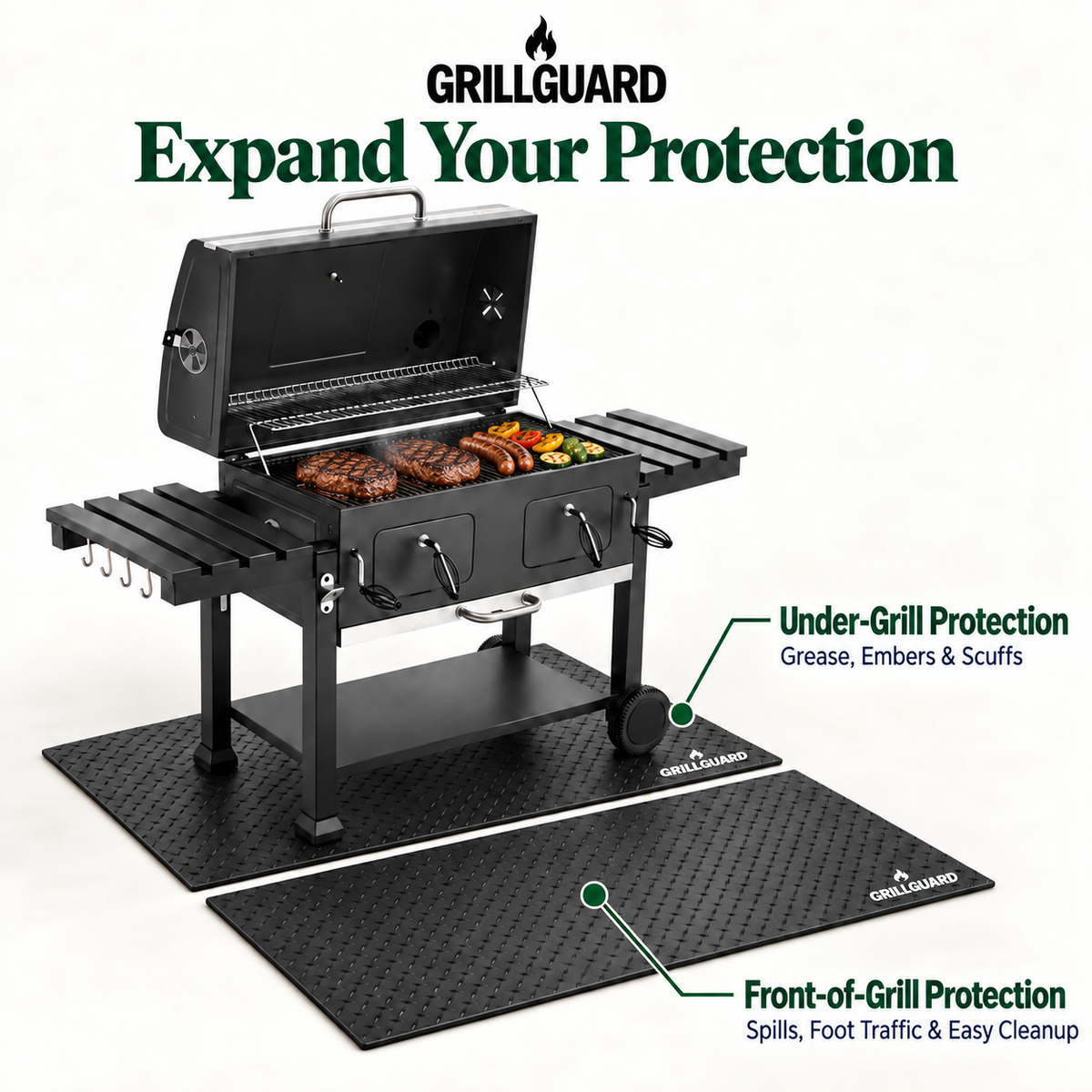
Whatever Comes Off The Grill Stops Here
Marinade down the side of the lid. Bacon fat through the grease hole. A splash of oil, a scatter of ash, a coal out of the chimney during the dump. All of it lands on a sealed, non-porous face with nothing to soak into, pools inside a raised perimeter lip instead of running off the edge, and comes off with a hose. The board underneath never meets any of it.
A Dropped Coal Stays On Top, Where You Can See It
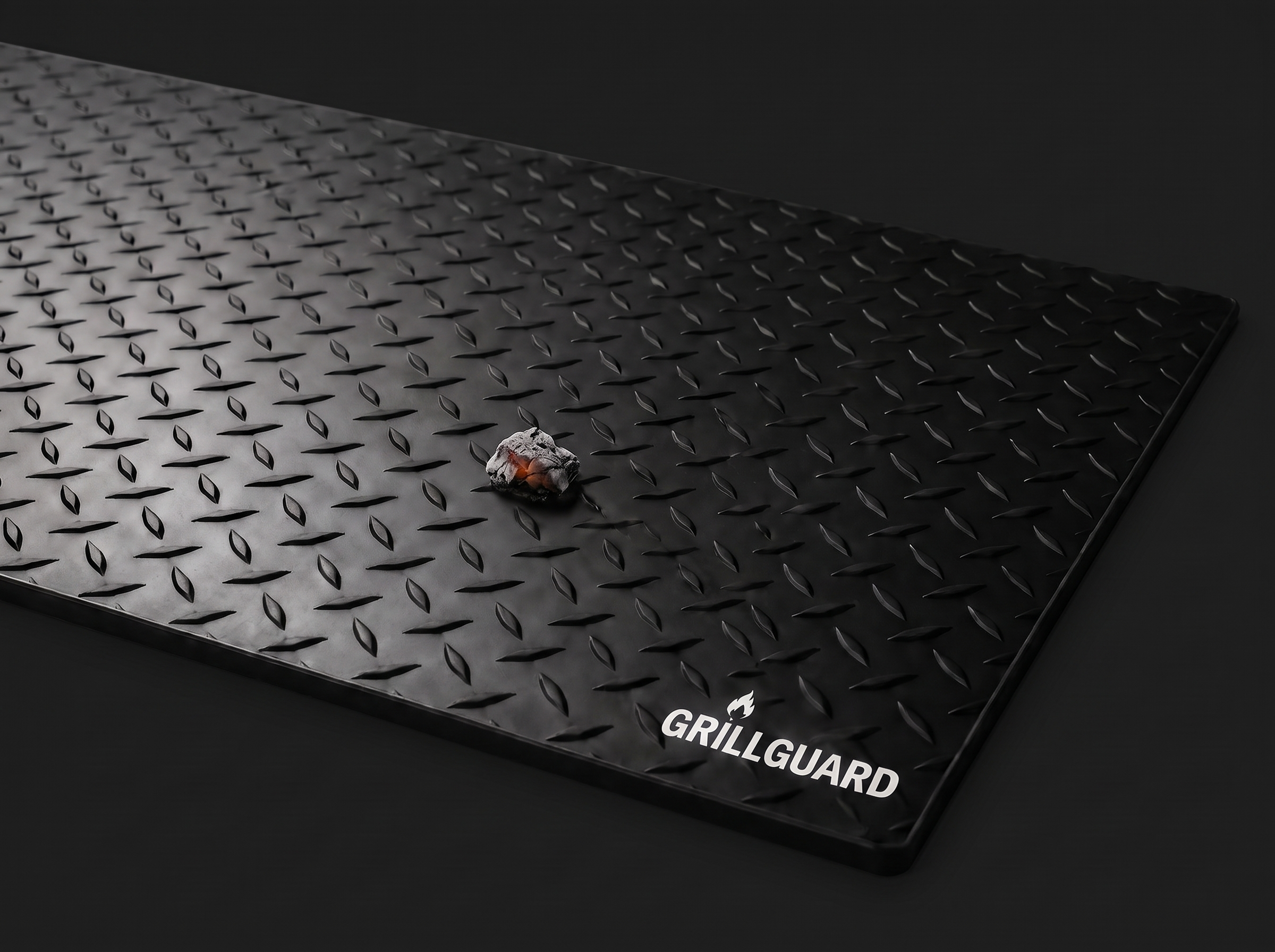
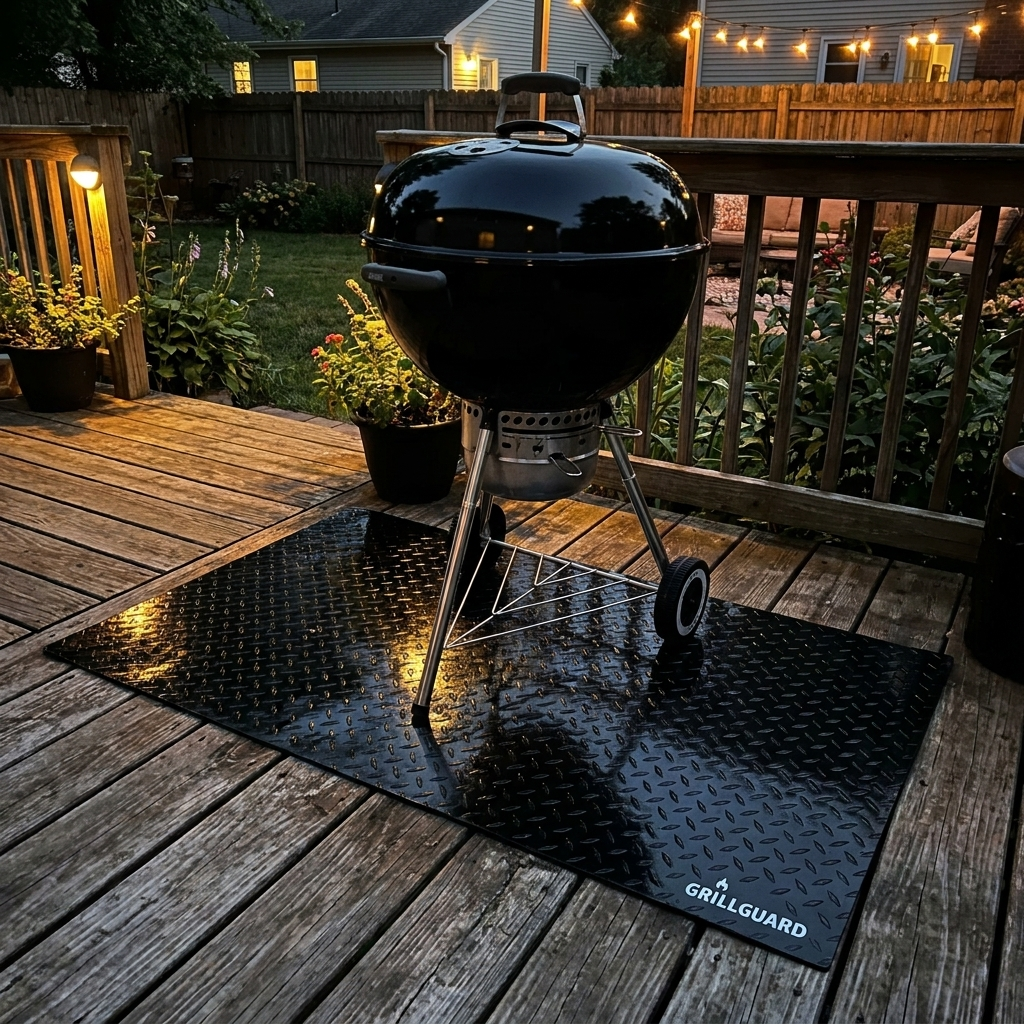
Coals leave during the dump, not during the cook — ten seconds with a chimney full of lit charcoal in the air, or a piece out through the ash catcher. On open decking the ones that matter are the ones that find the quarter-inch gap between two boards, where they get fuel on two faces, air from underneath, and somewhere to sit unseen. A charcoal ember burns at 700–1,200°F. The TriShield fire-resistant fiberglass core is rated to 1,250°F. Laid over the dump zone there is no gap to find: the coal stays on the surface, scars the face, and goes out where you can reach it.
Thick, Grippy, And It Stays Outside
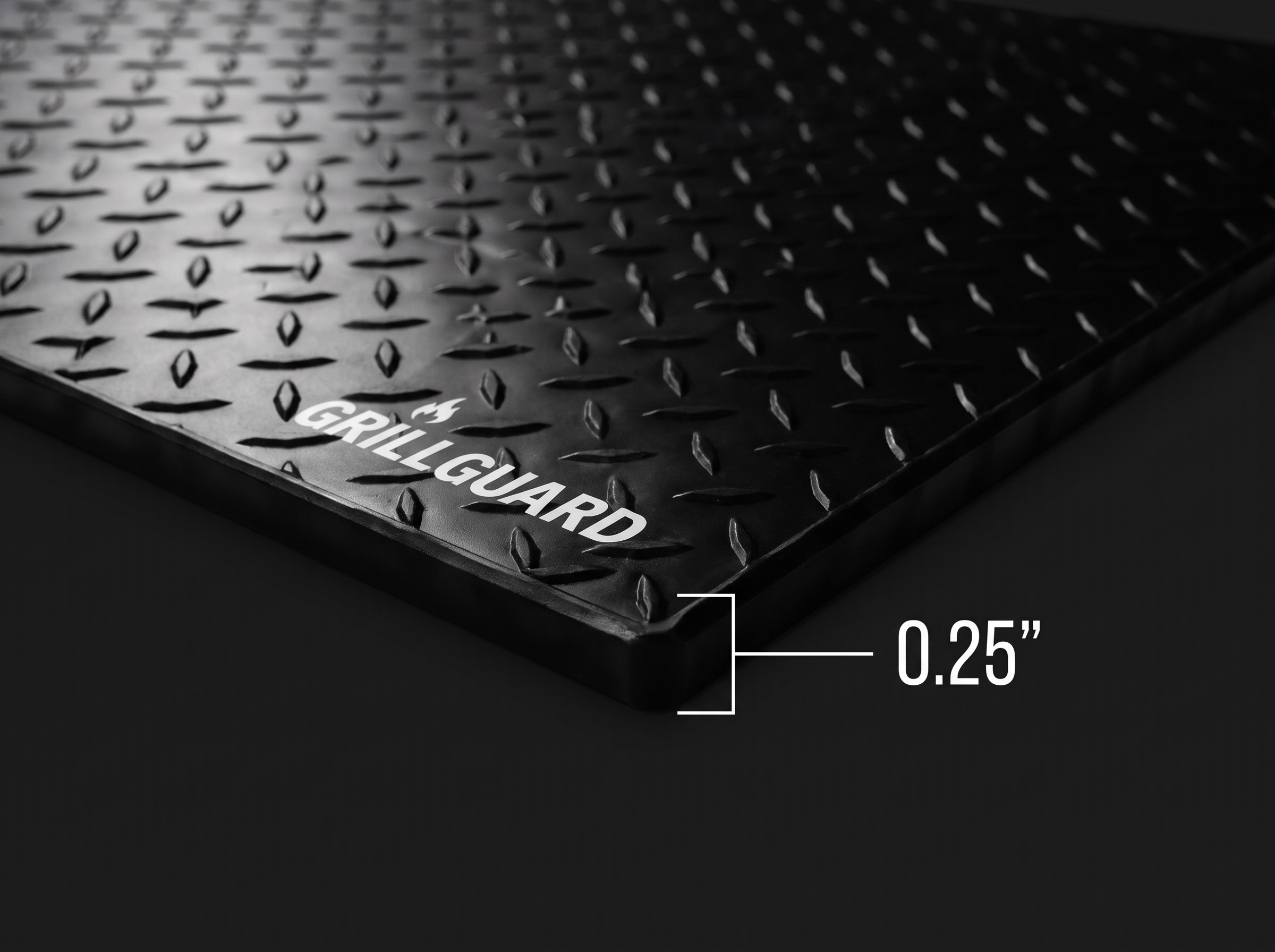
The mat most people buy first is a millimeter or two of felt that soaks grease up and holds it. This one is a quarter inch thick — roughly six times what the category ships. That weight, plus a textured silicone backing, is why it doesn't shift when the wind gets up, and the woven glass core keeps the corners from curling so there is nothing for weather to lift. The face is textured too, so it isn't slick underfoot when it's wet or greasy, and the beveled edge chamfers down to nothing — no lip to catch a toe. It has been left outdoors through a full wet season and a summer: no fade, no breakdown.
Fits The Cooker You Already Have
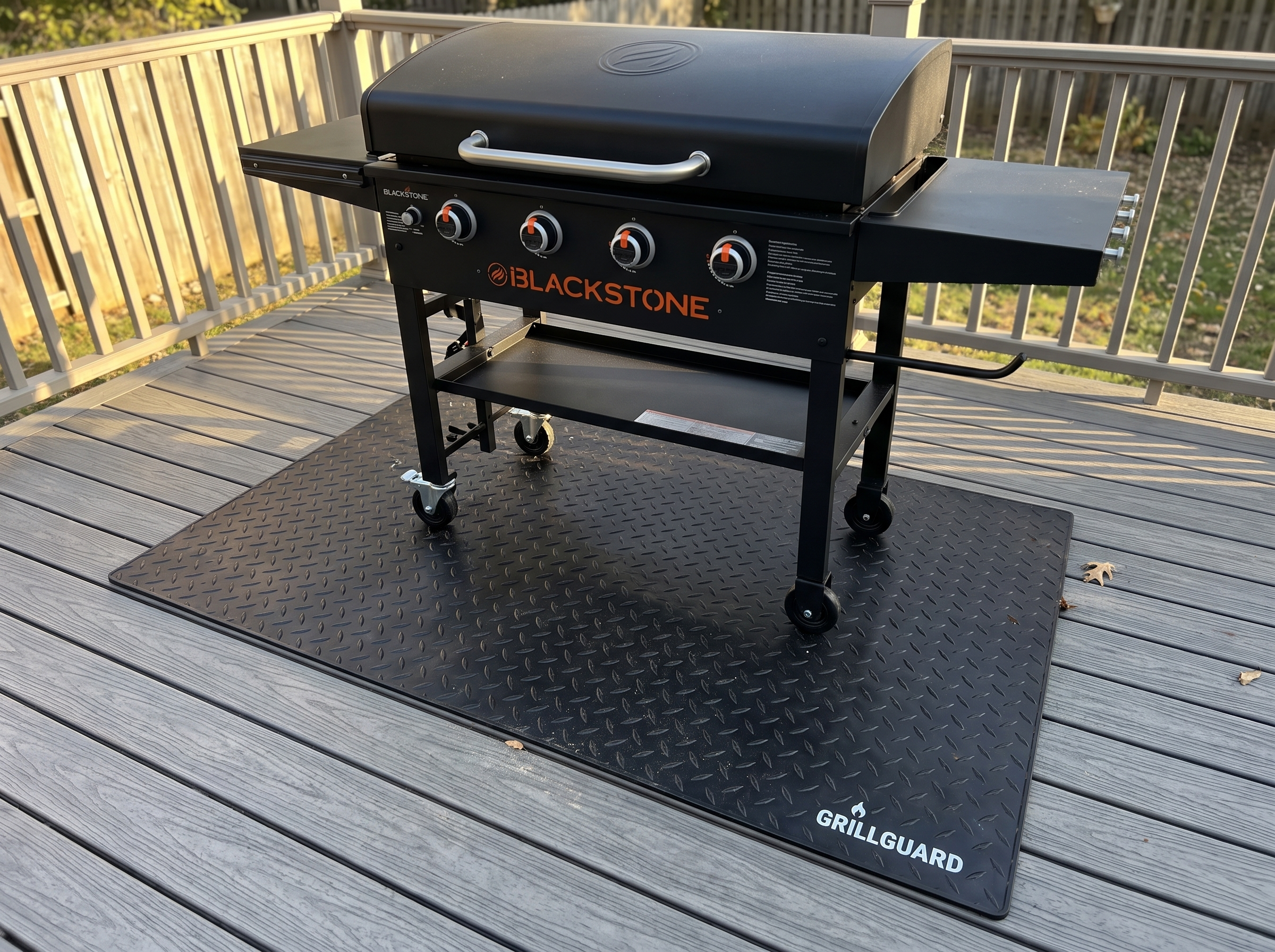
60 inches by 30 — 12.5 square feet. It covers a 22-inch kettle, a 3–4 burner cart gas grill or most pellet grills with room to spare. A 28 to 36-inch griddle throws splatter in front of and behind the cooker, past what one mat reaches, and honestly wants two laid end to end. It works the same on composite, wood, concrete and pavers. Measure your cooker's footprint and add a foot on the drip side.
“I'd been through two of the cheap ones. The first went slimy by the end of the summer and I binned it, the second curled so bad I kept catching my foot on the corner. So I ordered this one half expecting to send it back. It came rolled instead of folded, it's about six times the thickness of the last one, and grease just sits on top of it until I hose it. It's been under the smoker since May and I haven't thought about it once.”
WHO IT'S FOR
Four versions of the same problem
Grease buyers and fire buyers are mostly different people. This is built for both, and for the two who come after them.
“I've already got the stain and nothing takes it out.”
Grease on a deck is not sitting on top of the board — porous concrete, pavers, unsealed wood and a composite cap draw it in within hours. By the time you can see it, it is below the plane any cleaner reaches. The sealed, non-porous face and the raised perimeter lip mean it never touches a porous surface at all: it beads, it pools on the mat, it hoses off.
“It's the coal I don't see that I think about.”
A coal on an open board scorches and dies. A coal in the gap between two boards gets fuel on both faces, air from underneath, and cover. A continuous sealed field has no gap to lose one in — it stays on the surface, visible, and the fiberglass core arrests it where it lands.
“We just went composite and I don't know what it can take.”
A capped board is a polymer skin over a wood-flour core. That skin is why the deck resists stains — and it is also why it cannot be sanded, so the only repair on composite is replacing the board. Grease that reaches the cap is inside the one layer nothing can get back out of. The fix is that it never reaches the cap.
“The deck's brand new and I want to keep it that way.”
A capped board cannot be sanded — the cap is the protection, so the only repair on composite is replacing the board. Damage on this surface is a one-way ratchet, and the board is in the best condition it will ever be in right now. The cheapest time to cover it is before the first cook.
THE WHOLE CASE
Four reasons, and that's the lot
No mechanism arms race. One mat, built around the three things that let it stay down permanently.



What we tested before we sold one
FROM THE DECK
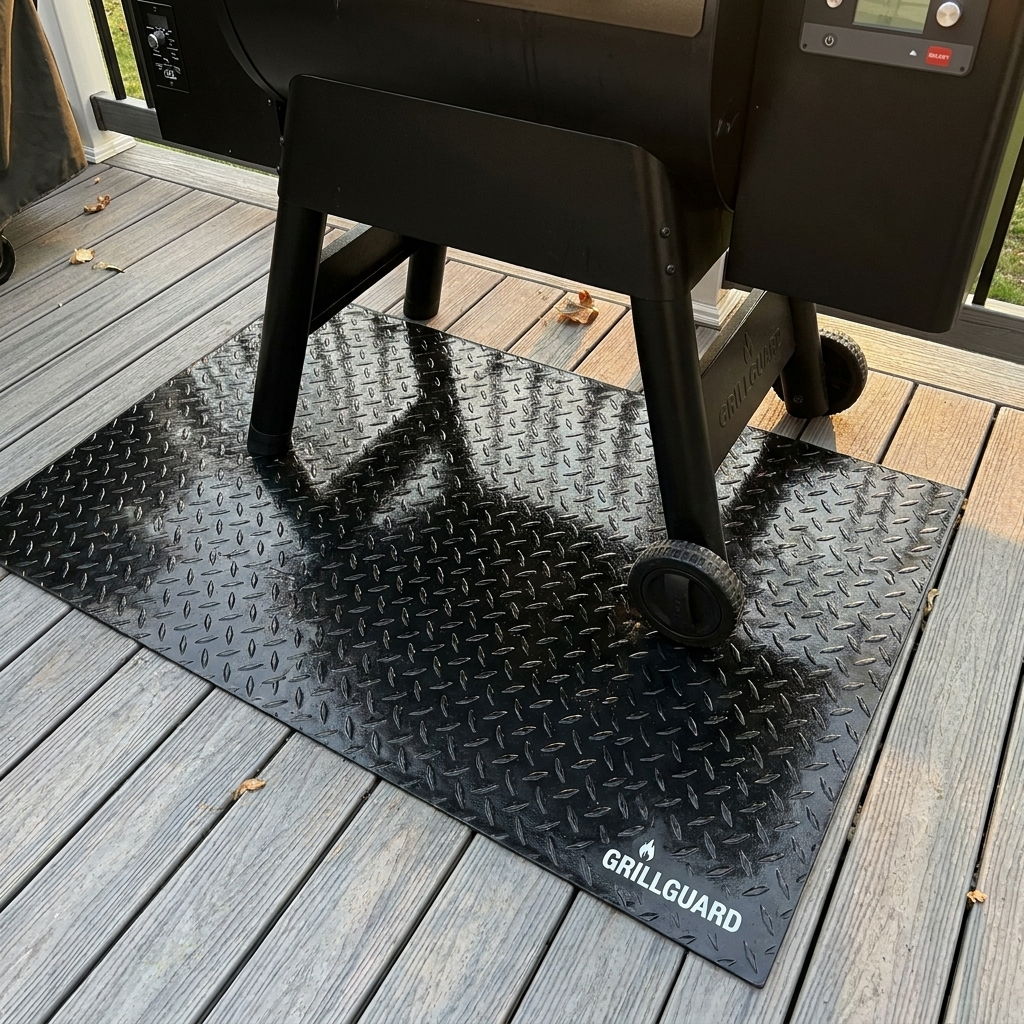
HOW IT WORKS
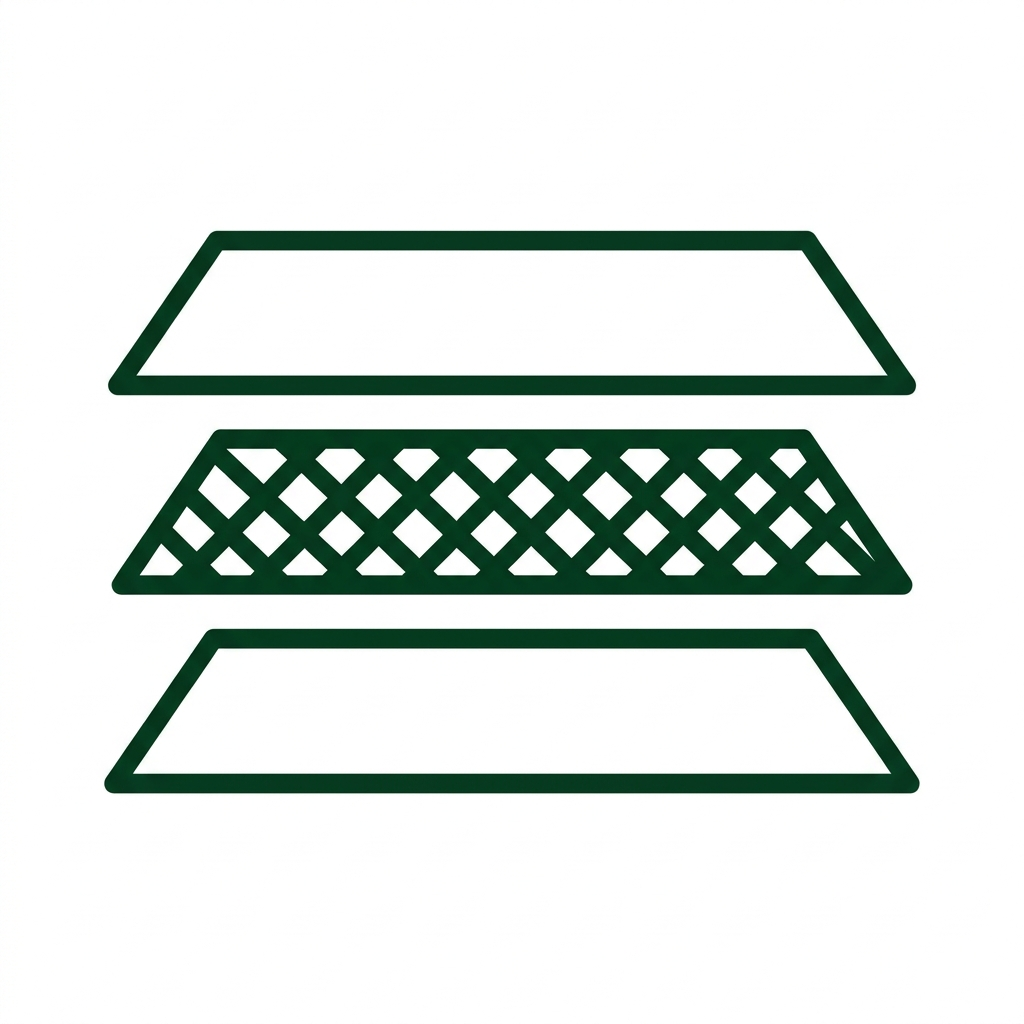
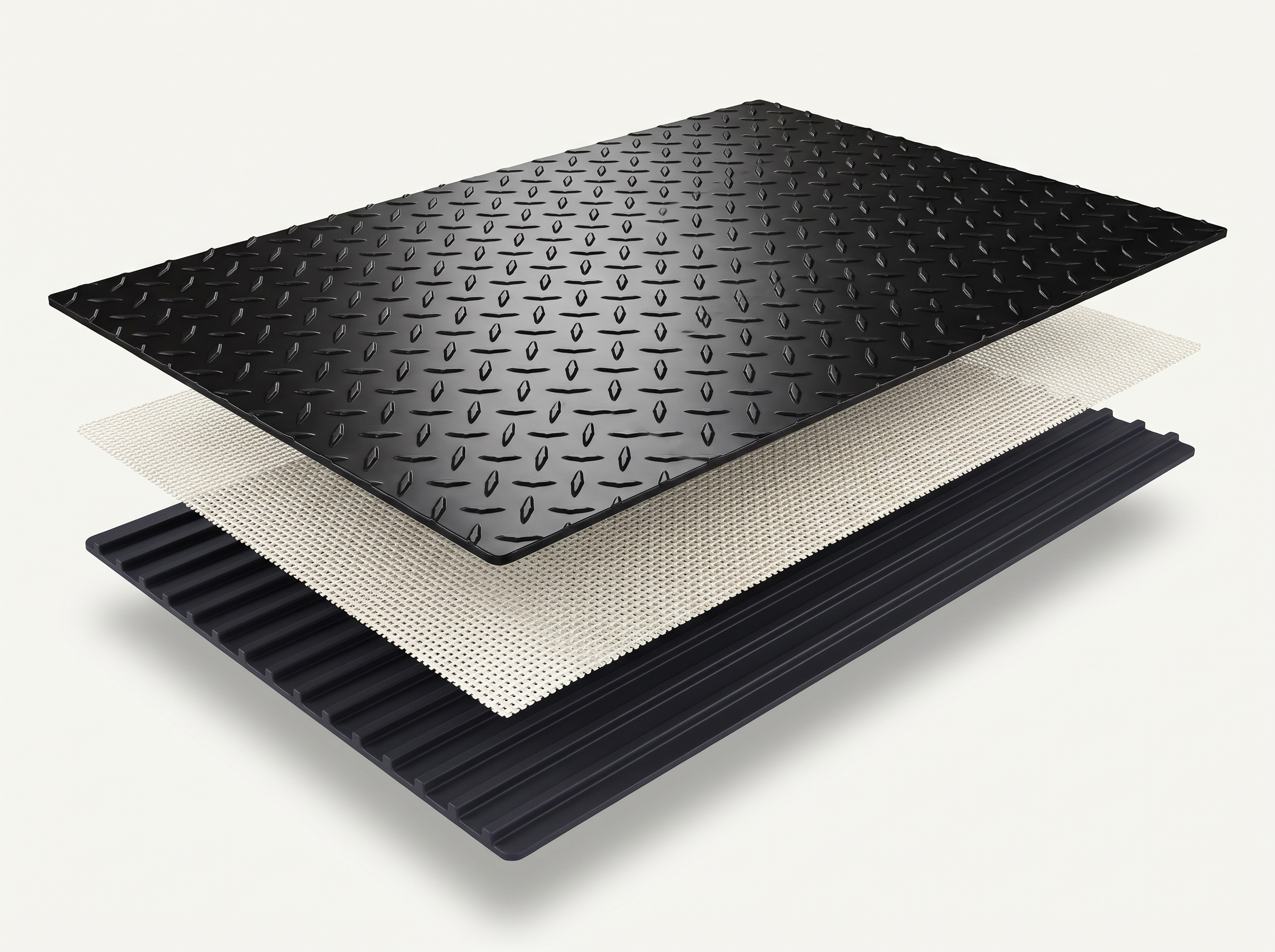
Three layers. One job each.
Every mat in this category is one material asked to do three jobs that fight each other. That is why grease mats melt and fire mats soak.
Layer 1 — the face you clean
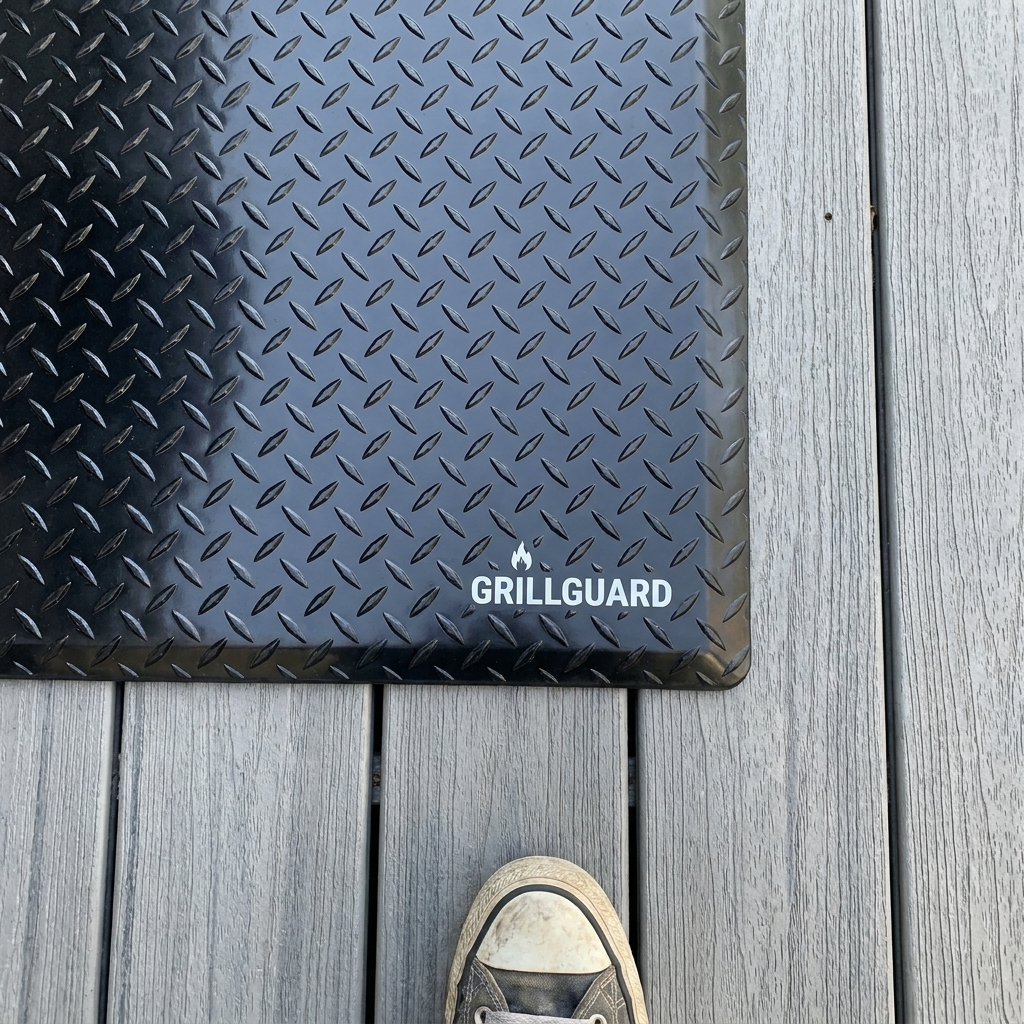
Sealed, closed-cell PVC in a raised diamond-plate tread. Nothing soaks in, so grease beads and rinses off, and a raised perimeter lip keeps what drips inside the mat instead of running off the edge. It is specified with polymeric plasticizers — high molecular weight, low migration — and all monomeric phthalates are excluded, because the small mobile softeners are what migrate into a composite cap. A UV package keeps it weathering at a rate that does not leave the board underneath looking different from the board beside it.
Layer 2 — the core that stops things
Woven E-glass scrim, fully encapsulated on both faces, doing two jobs at once. A charcoal ember burns at 700–1,200°F. The TriShield fire-resistant fiberglass core is rated to 1,250°F. So a dropped coal melts the face and arrests at the scrim instead of reaching the board. And because woven glass does not stretch or shrink, it restrains the PVC through heat cycles — which is why the mat lies flat instead of curling at the corners by August.
Layer 3 — the side against your deck
Ribbed silicone. Chemically inert, so there is nothing in it to migrate anywhere. Molded channels along the long axis hold the mat body off the boards, which gives water a way out and air a way under, so nothing sits wet against the deck. The same texture grips the deck so wind does not lift it, and the face above grips your shoes when it is wet.
THE FIRST SEASON
What it usually looks like
Not a promise — the pattern customers describe most often.
Flat out of the tube
It ships rolled on a core, so there is no crease to wait out. Slide it under the cooker, press the bevelled edge down, and that is the install.
First grease, first hose-off
Grease has landed and rinsed off the sealed face. Most people tell us this is the point they stop putting a sheet of cardboard down.
You stop checking
Most customers have stopped lifting it to look. The ribs have been draining every rainfall, and the boards underneath are drying when the rest of the deck dries.
Lift it and compare
What you are checking for is whether the board under it matches the board beside it. That is the test this mat is built to pass.
THE HONEST COMPARISON
What each option actually stops
The 30-Day Deck Guarantee
Your deck stays clean, or it's free. Put it down and cook on it for thirty days — grease, drips, whatever your cooker does. If your deck is not as clean as the day you put the mat down, or you are unhappy with it for any other reason, one email gets you a full refund and you do not have to ship the mat back. Fewer than 2% of buyers have ever used it.
Leave it down. That's the whole idea.
★ 4.8 · 1,472 reviews · 14,206 decks covered — grease beads on a sealed face and hoses off · a dropped coal stops in the mat, not in your deck · 30-Day Deck Guarantee
Customer Reviews
Put it down under a pellet grill in May and it's been there since. Whatever comes off the cooker stays on the mat until I hose it. Took about four minutes all season.
There's a patch on my boards from two summers of drips that no amount of degreaser has touched. Bought this so I stop adding to it. Should have started with a mat.
New pour, and I wasn't putting a grill on it without something underneath. Grease drips hit the mat, the hose knocks them off. Patio's still the color it was poured.
Dumped a chimney and one got away. Melted a spot about the size of a quarter into the mat and stopped. Picked it up with tongs. I'd rather have that mark on a mat I can replace.
Grill's been living on the concrete by the garage for three years because I didn't want coals on the boards. It's back on the deck now. First time I've cooked up here since we built it.
Knocking a star off because I don't think people read it properly: if a coal lands on this, the mark is permanent. It says so, it's not hidden, but I've already seen someone complain about it. That's the mat doing its job. Four stars because I wish the face was a shade less shiny in full sun.
First one I've done on the deck. Didn't lie there doing the maths at 2am.
The last two curled at the corners inside a season and I kept catching my foot on them. This one came rolled instead of folded and it's sat flat since day one.
I've bought the thin ones. They're a rug. You can feel this one is doing something the second you pick it up.
This is on me — I run a 36" griddle and the splatter goes way out front and behind, so one mat doesn't cover it. To be fair the page says that. I've ordered a second and between the two it's sorted, but I'd have liked to work that out before I clicked.
My old one was felt and it went rancid by August. Grease sits on top of this and comes off with a hose.
Deck cost us more than the car. Seventy bucks to stop thinking about the one thing that could mark it was not a hard decision.
I was hosing grease off the porch every weekend. Gave him this the day it came. Haven't had to do it since.
Diamond plate was the right call. It doesn't show every mark the way a flat surface would, and it's not slick when it's wet.
ANY LAST QUESTIONS?
The things people ask before they order
What size is it, and what does it fit?
60" × 30" — 12.5 square feet. It fits with margin under a 22" kettle, a 3–4 burner cart-style gas grill, and most pellet grills. A 28"–36" griddle throws grease in front of and behind the cooker beyond a single mat's footprint; two laid end to end is the right answer there.
Can I cut it to fit?
No, and this is a real limitation. The fiberglass core is fully encapsulated, so any cut exposes glass and unseals the edge. It is a fixed size on purpose.
Will it actually stop grease getting to the deck?
Yes, and that is the job it was built around. The face is sealed and closed-cell — no weave, no felt, nothing for oil to sink into — so grease beads on the surface, pools inside a raised perimeter lip rather than running off the edge, and hoses off. The reason this matters is that grease which reaches a deck does not sit on top of the board: porous concrete, pavers, unsealed wood and a composite cap all draw it down within hours, which is why cleaning it later so rarely works.
What actually happens when a coal lands on it?
The face melts locally and leaves a permanent mark; the woven fiberglass scrim beneath arrests the burn. A charcoal ember burns at 700–1,200°F. The TriShield fire-resistant fiberglass core is rated to 1,250°F. To be clear about what it is not: it catches what falls, it is not a barrier against sustained or radiant heat, it does not change the fire rating of your deck, and no mat makes a cooker safe to leave running unattended.
How do I clean it?
Hose it. The face is sealed and non-porous, so grease beads rather than soaking in. Most people do it a handful of times a season. Nothing to launder, nothing to wring out.
Does it slide, or lift in wind?
The silicone backing grips the deck and the mat has real weight to it. The face is textured too, so it is not slick underfoot when it is wet or greasy.
Does it need to come up between cooks?
No. It is specified to stay down: ribbed silicone backing so water drains and air moves underneath, a UV package in the face, and a woven glass core that keeps the corners from curling through hot and cold cycles. It ships rolled rather than folded, so it is flat from day one.
My deck is already stained. Will this help?
Not with the stain you have. Grease that has already been drawn into concrete, pavers or a composite cap is below the plane anything reaches, and this product prevents rather than removes. What it does is stop the next one.
Will the mat itself mark my deck? I've read that some do.
It is a fair question and the answer is in the specification. What marks a board under a mat is usually one of three things: monomeric plasticizers — the small, mobile softeners in cheap flexible PVC and rubber — migrating out under heat and load into the cap layer; a flat back that behaves like a lid so the board never dries; or a face with no UV package, which leaves a lighter patch when you lift it. TriShield is specified against all three: polymeric plasticizers only with all monomeric phthalates excluded, an inert silicone layer as the only thing touching your deck, molded ribs that keep a drainage path and an air gap, and a UV package in the face. Surface-compatibility testing against capped composite ran 30 days under load at elevated temperature and humidity, and a full-season outdoor trial was left down and then lifted and inspected. Per-brand results are published as they are finalized.
What if I don't like it? How do refunds work?
Email us within 30 days of delivery with your order number and we refund you in full — that is the 30-Day Deck Guarantee: your deck stays clean, or it's free. You do not need to send the mat back. Refunds go to the original payment method and usually show up within 5–7 business days. Shipping: free on two or more, with tracking on every order.